



Education, Partnership and Real Production Progress
As environmental regulation tightens and energy costs continue to rise, composite manufacturers across the Baltics and Nordic regions are actively seeking cleaner, more efficient production methods.
For more than a decade, Composite Integration has partnered with Bang & Bonsomer to support that transition. Since 2014, this collaboration has focused not simply on supplying equipment, but on building long-term technical capability in resin infusion, RTM and closed-mould composite manufacturing.
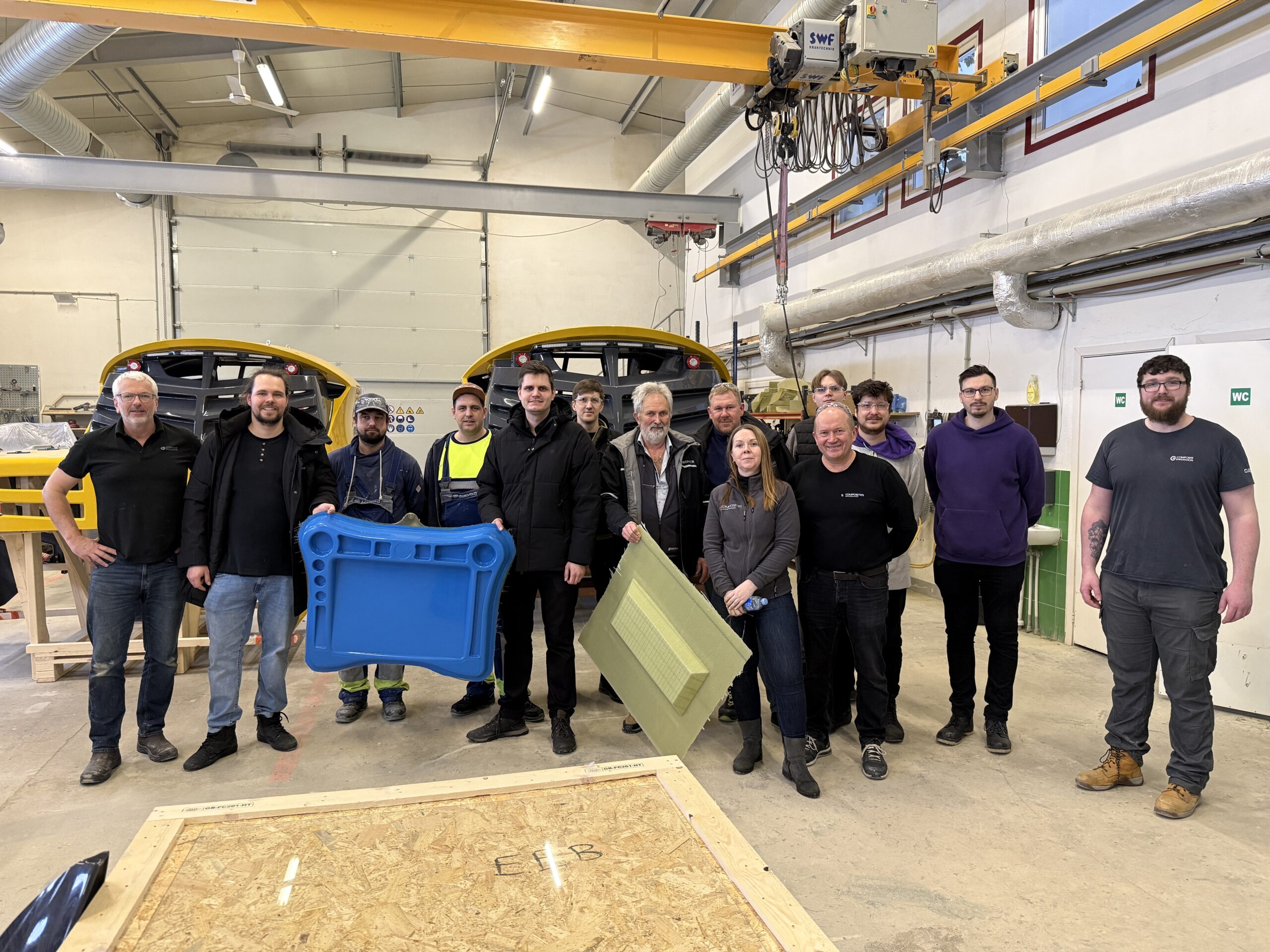
A recent two-day training workshop in Lithuania and Latvia, organised jointly by Composite Integration and Bang & Bonsomer, demonstrated how strong partnership, shared expertise and the right technology are enabling real production-ready change.
Two Countries. Multiple Companies. One Shared Objective
The workshop was delivered across two sessions:
- Kaunas, Lithuania: 18 attendees representing a range of composite manufacturing companies
- Soldas, Latvia: 14 attendees from multiple organisations and countries, including Denmark and Norway
These were established manufacturers, many currently operating hand lay-up and chop-spray processes, who are now actively exploring closed-mould composite manufacturing as a strategic next step.
Organised locally by Ricardos Kozeniauskas (Bang & Bonsomer, Sales Manager) and Richard Bland (Composite Integration, Technical Director) and supported by their wider teams, the sessions created a collaborative environment where companies could openly discuss shared production challenges, including:
- Emissions control and regulatory pressure
- Energy efficiency in cold climates
- Process repeatability and quality consistency
- Transition planning from open mould to closed-mould systems
This is where partnership becomes powerful. It brings together equipment expertise, material knowledge and real factory experience to support meaningful progress.
The workshop was delivered by Richard Bland (Composite Integration, Technology Director) and Jacob Doyle (Composite Integration, R&D Lab Technician). Their combined experience ensured the training focused not only on process theory, but on implementation within real composite production facilities. This philosophy underpins Composite Integration’s approach: education first, equipment second.

CIJECT Technology Supporting Closed-Mould Implementation
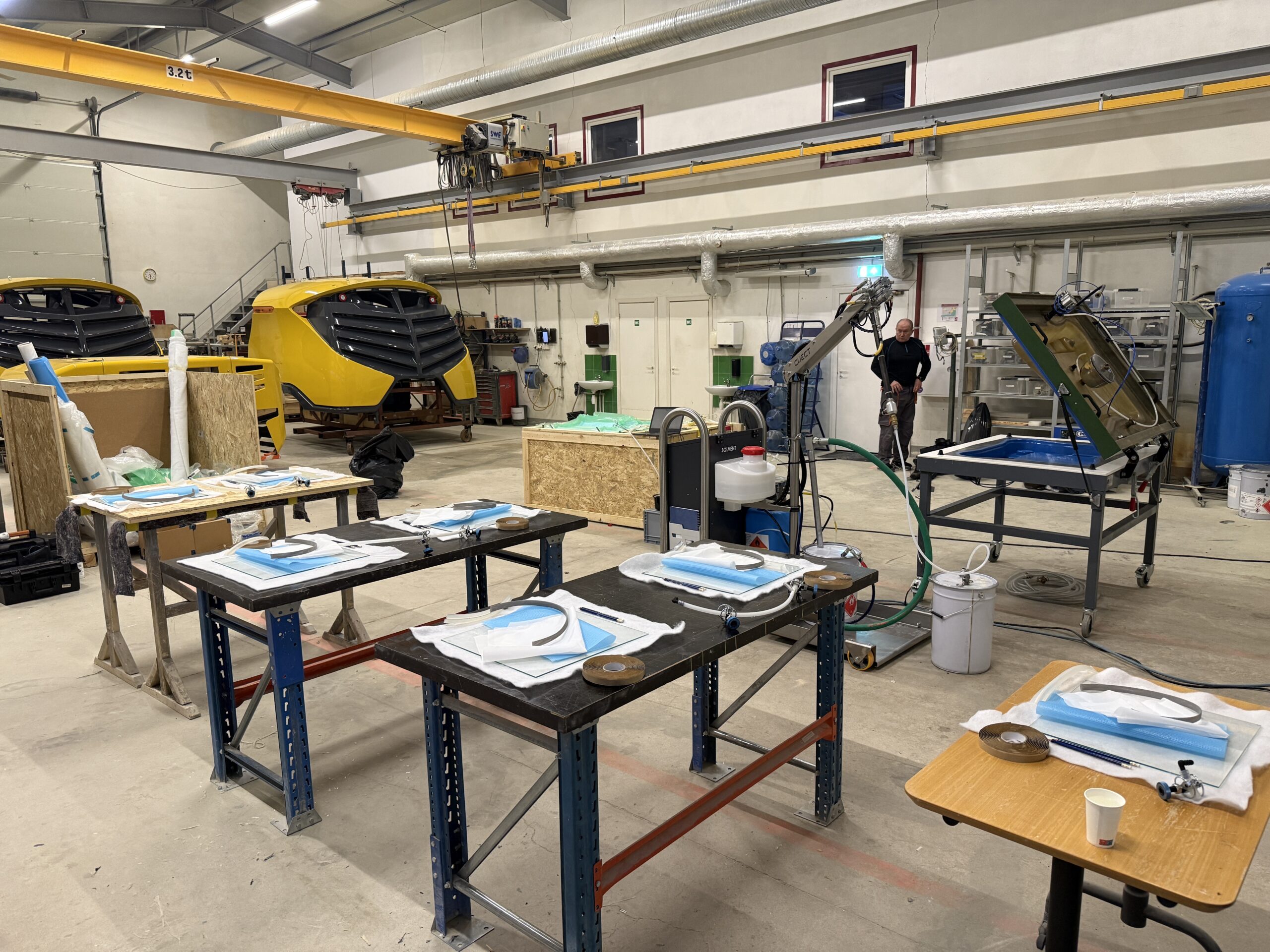
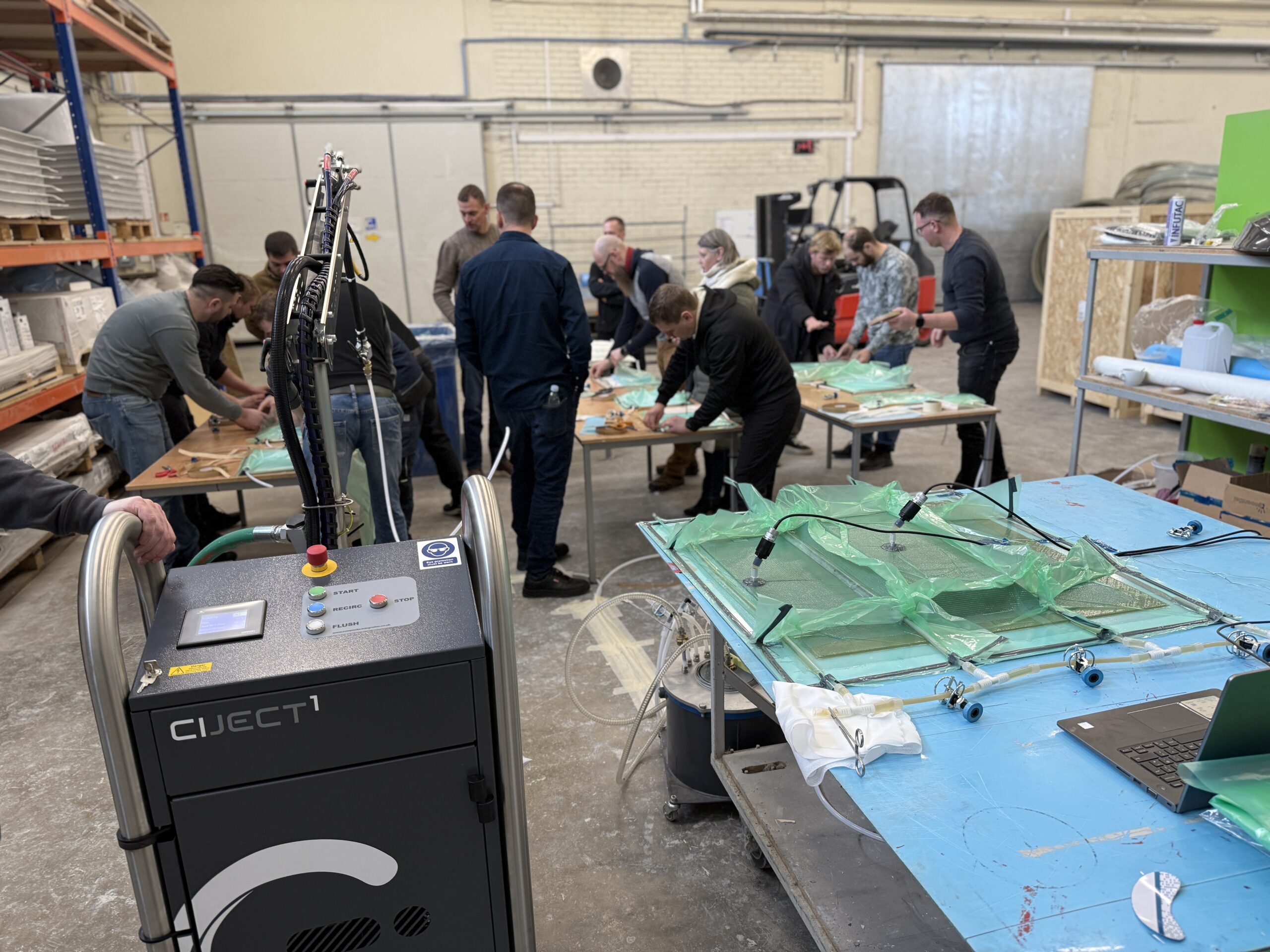
An integral part of the workshop was the live use of CIJECT resin infusion and injection equipment. By demonstrating and operating CIJECT equipment during the sessions, attendees experienced how controlled resin injection improves consistency, reduces emissions and enhances process stability compared to traditional open mould methods.
Seeing equipment in action bridges the gap between concept and production reality.
Why Manufacturers Are Transitioning to Closed-Mould Processes
Across both sessions, several common drivers emerged.
1. Reducing Styrene Emissions
Open mould composite manufacturing can generate significant styrene emissions. In regions where factories operate near local communities, this creates environmental and regulatory pressures.
Closed-mould processes such as RTM, LRTM and Direct Infusion contain resin within a sealed system, dramatically reducing emissions and improving workplace conditions. For many manufacturers, this is no longer optional. It is strategic.
2. Reducing Energy Consumption in Cold Climates
Manufacturers in Lithuania, Latvia, Finland, Norway and Denmark operate in harsh winter conditions. Open mould production requires high air extraction rates, leading to substantial heat loss.
Closed-mould systems reduce extraction requirements, helping facilities retain heat and lower energy costs. In today’s manufacturing landscape, energy efficiency directly impacts competitiveness.
3. Improving Quality and Repeatability
Hand lay-up and chop-spray processes often introduce variability:
- Inconsistent resin ratios
- Air entrapment
- Operator-dependent results
- Greater scrap rates
Closed-mould composite manufacturing introduces controlled resin flow, vacuum integrity and degassing, resulting in:
- Improved laminate quality
- Higher repeatability
- Reduced rework
- More predictable cycle times
For companies looking to scale production or enter regulated markets, this process control becomes essential.
Four Key Closed-Mould Processes Covered
The workshop introduced four essential liquid composite moulding (LCM) processes, explaining their suitability, production volume capabilities and practical implementation pathways:
- Direct Infusion
An efficient entry point for manufacturers transitioning from open mould processes. - Reusable Vacuum Bag Technology
Reducing consumable waste while improving process consistency.
Light Resin Transfer Moulding (LRTM)
Suitable for medium-volume production with enhanced surface finish and control. - Resin Transfer Moulding (RTM)
High repeatability and precision for structural composite components.
Each process was positioned not as a standalone solution, but as part of a structured transition strategy depending on production goals.
Four Hours of Practical, Hands-On Training
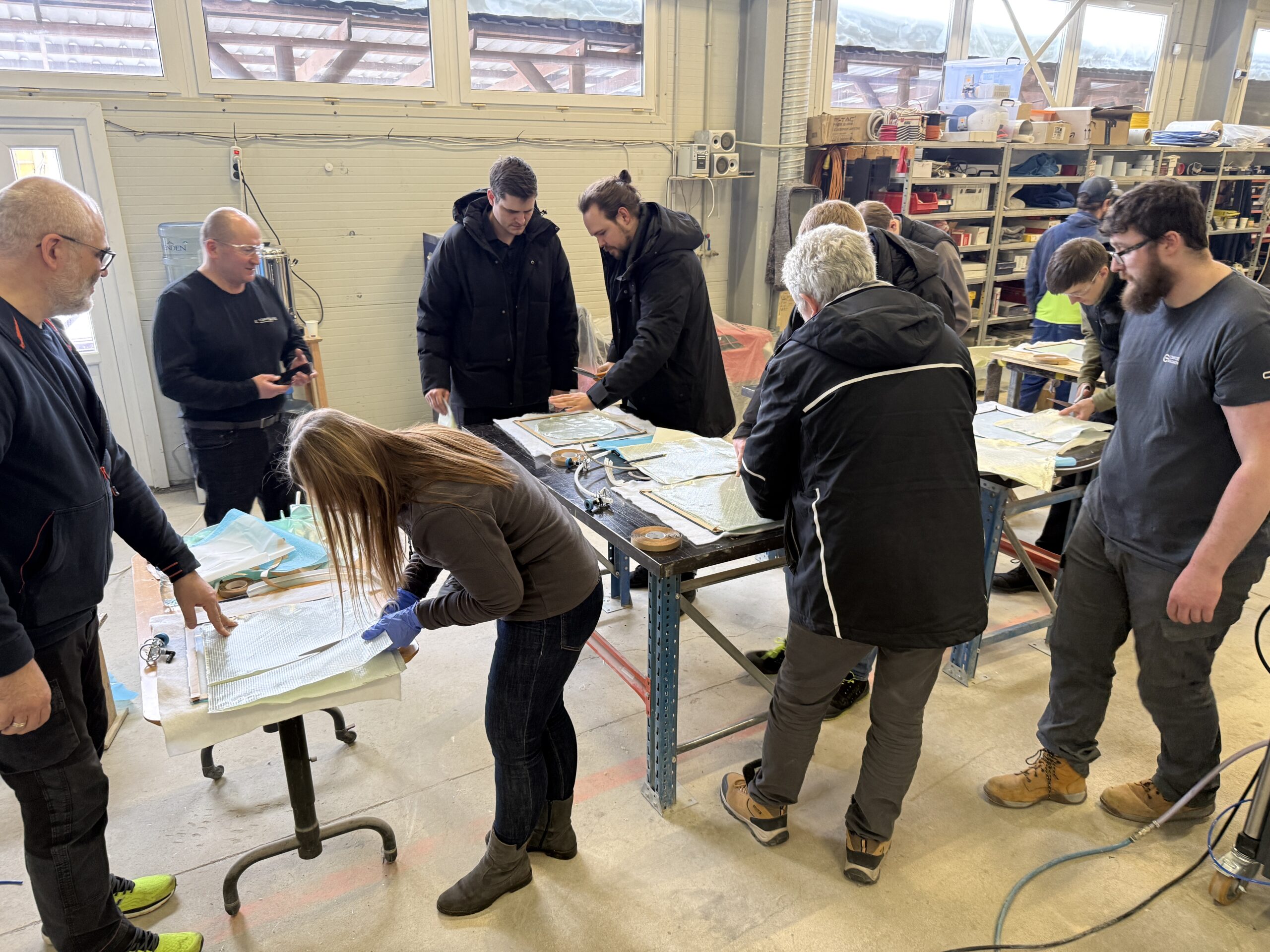
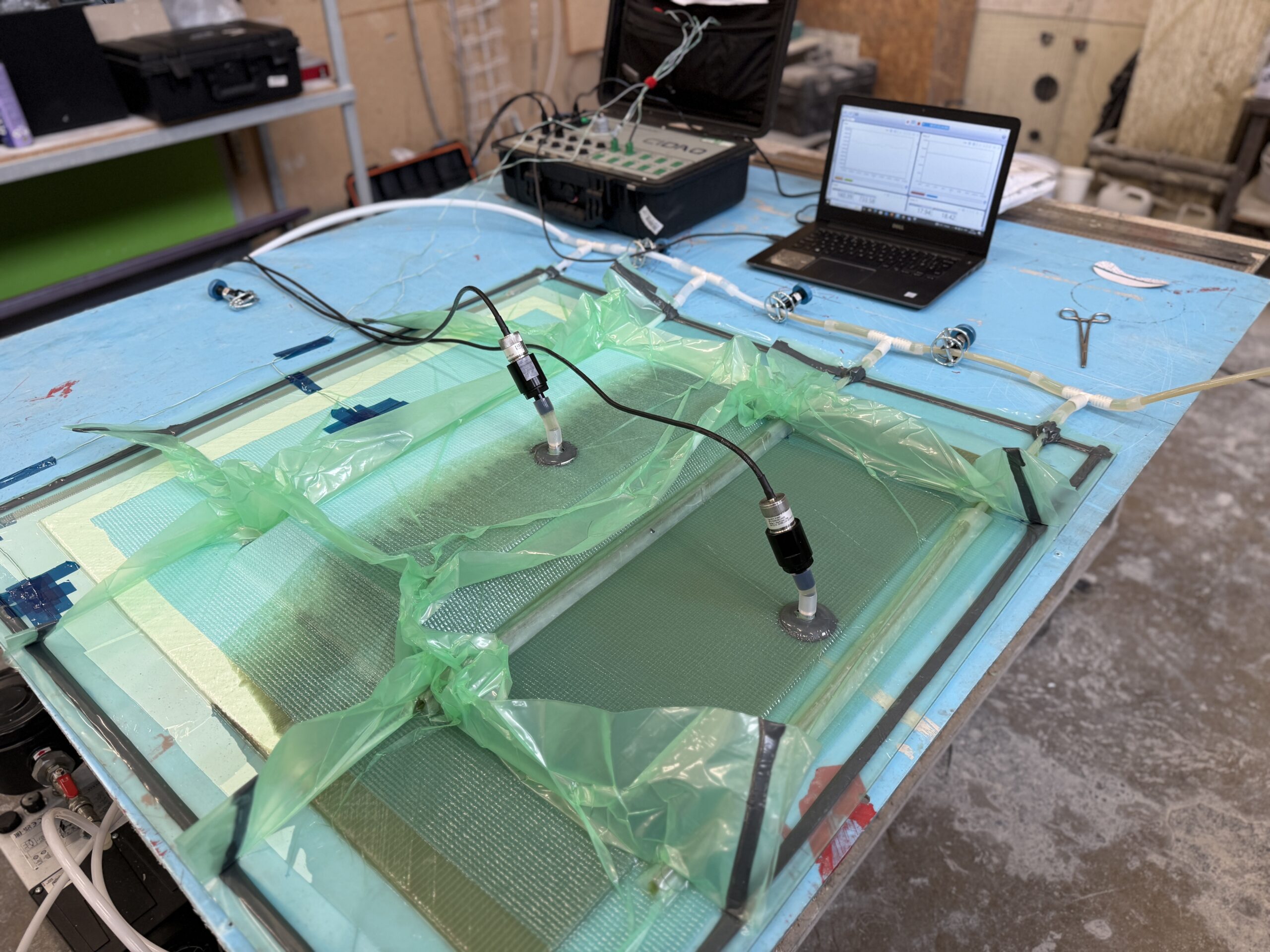
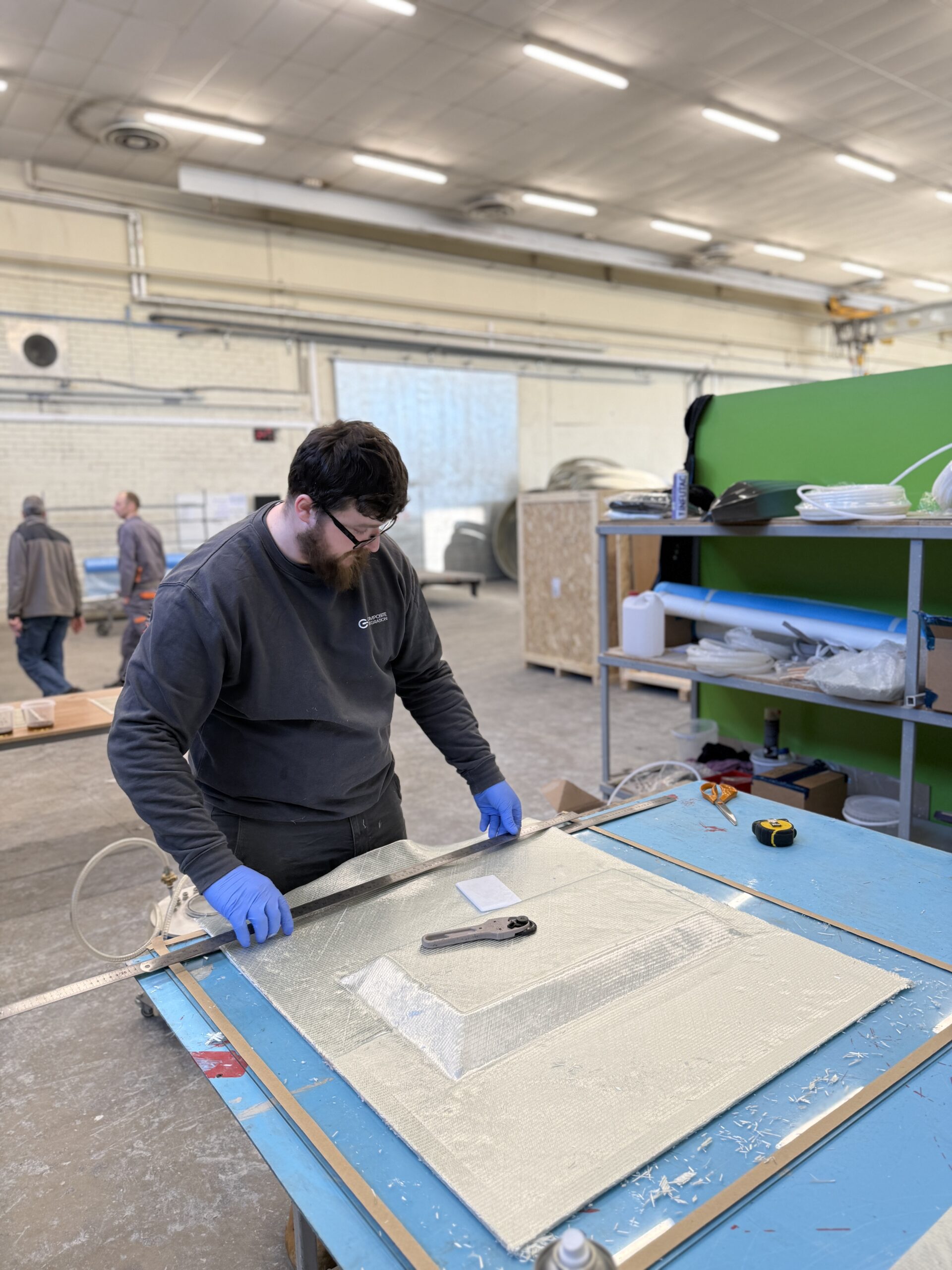
Each day included approximately four hours of live demonstrations and practical work. Attendees worked in pairs using CIJECT-supported Direct Infusion systems to:
- Establish vacuum integrity
Control resin injection - Observe flow dynamics
- Understand the role of degassing
- Compare open mould variability with closed-mould stability
For companies transitioning from hand lay-up and chop-spray, this hands-on experience provided clarity and confidence. It demonstrated that closed-mould composite manufacturing is not simply an environmental improvement, but a pathway to higher quality and scalable production.
Partnership as a Catalyst for Real Manufacturing Change
The collaboration between Composite Integration and Bang & Bonsomer is built on a shared objective: enabling composite manufacturers across the Baltics and Nordic regions to operate more efficiently, sustainably and competitively.

By bringing together manufacturers, Bang & Bonsomer’s regional network and Composite Integration’s process and equipment expertise, this workshop delivered more than training.
It strengthened a community of companies committed to modernising composite production. Closed-mould manufacturing is not simply a technology upgrade. It is a strategic evolution towards:
- Lower emissions
- Reduced energy consumption
- Improved repeatability
- Higher structural performance
- Scalable production capability
- Through strong partnership and practical education, that evolution is already underway.
Start the Conversation
If you are exploring a move from open mould to closed-mould composite manufacturing, we would welcome a discussion.
Contact us to discuss your current process and define the next step forward.