

Scaling Composite Manufacturing Changes the Challenge
Composite manufacturers are under increasing pressure to produce larger structures, increase production rates and deliver consistent quality. As manufacturing scales, traditional resin infusion methods can become more difficult to control, with greater potential for variability, material waste and operator dependency.
Recognising these challenges, Composite Integration pioneered Direct Infusion – a manufacturing technology developed to provide greater control throughout the infusion process. Combining automated resin processing, continuous resin delivery and real-time process monitoring, Direct Infusion helps manufacturers establish more controlled, repeatable and production-ready manufacturing environments.
Whether manufacturing wind turbine blades, large marine structures or other complex composite components, the objective remains the same: create a manufacturing process capable of delivering consistent results, every time.
Why Manufacturing Becomes More Challenging as Production Scales
As production increases, manufacturers must control far more than simply getting resin into a mould. They need confidence that every component is manufactured under consistent process conditions, regardless of operator, shift or production location.
Common manufacturing challenges include:
- Maintaining consistent resin quality throughout production
- Reducing variation between operators and shifts
- Improving repeatability across multiple production lines
- Increasing process visibility and traceability
- Controlling material usage and waste
- Replicating successful manufacturing cells across facilities
These challenges are common across composite manufacturing and become increasingly important as production moves from development into industrialised manufacture.
Why Traditional Infusion Methods Become More Difficult to Scale
Traditional resin infusion remains a highly effective manufacturing process and continues to be widely used across the composites industry. However, many conventional methods rely on manual resin preparation, batch mixing and operator judgement throughout the infusion process.
As resin volumes, component size or production rates increase, these manual activities can introduce additional variability. Manufacturers may find themselves managing:
- Multiple resin batches
- Manual material handling
- Variations in mix consistency
- Increased operator intervention
- Limited process data
- Greater dependence on operator experience
For manufacturers seeking greater repeatability and production confidence, reducing these variables becomes increasingly important.
Direct Infusion Technology Pioneered by Composite Integration
Direct Infusion builds on the proven principles of conventional resin infusion while introducing a more controlled approach to resin processing.
Instead of preparing resin in batches before infusion begins, resin is continuously metered, mixed and delivered directly to the mould as required. This provides a more stable manufacturing process by reducing interruptions, improving material control and minimising manual intervention.
Rather than relying on operators to maintain consistency throughout long infusions, manufacturers establish consistency through controlled resin processing and automation. The result is a manufacturing process that is easier to monitor, optimise and repeat.
Four Ways Direct Infusion Supports Industrialised Manufacturing
1. Continuous Resin Processing
Resin and hardener are accurately metered and mixed throughout the infusion process, helping maintain consistent processing conditions regardless of infusion duration.
2. Reduced Operator Dependency
Automated resin preparation and delivery remove many routine manual activities, helping deliver more consistent outcomes between operators, production shifts and manufacturing facilities.
3. Greater Process Visibility
Modern Direct Infusion systems capture process data throughout manufacture, allowing engineers to monitor critical process parameters rather than relying solely on visual observation. Integrated Mould Pressure Sensors (IMPS) provide real-time insight into mould pressure and resin progression, helping identify deviations early and supporting continuous process improvement.
4. Easier Production Replication
Standardised resin processing enables manufacturing cells to be replicated more easily across production lines and facilities, supporting consistent quality as manufacturing capacity grows.
What Does a Typical Direct Infusion Production Cell Look Like?
Direct Infusion is more than a resin delivery method. It is a coordinated manufacturing system designed to improve control throughout the entire infusion process.
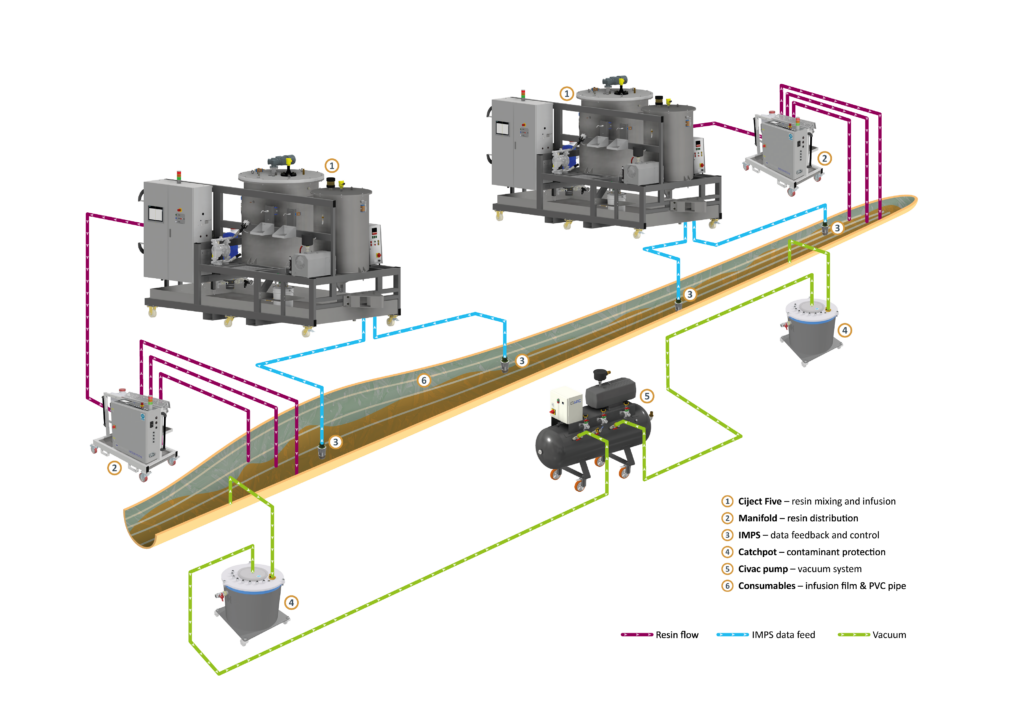
Figure 1. Typical Direct Infusion production cell for large wind structures.
The system combines several integrated technologies, each contributing to a more controlled manufacturing process.
Component | Purpose |
|---|---|
CIJECT® 5 Resin Mixing & Infusion System |
Continuously meters, mixes and delivers resin directly to the mould. |
Resin Distribution Manifold |
Ensures controlled resin delivery across large and complex moulds. |
Integrated Mould Pressure Sensors (IMPS) |
Provide real-time pressure feedback from within the mould, improving process visibility and control. |
Catch Pot |
Protects the vacuum system from resin contamination. |
CIVAC® Vacuum System |
Maintains stable vacuum conditions throughout the infusion process. |
Infusion Consumables |
Support controlled resin flow and laminate consolidation. |
Working together, these technologies create a manufacturing environment that is easier to control, optimise and replicate than traditional resin infusion methods.
Where Direct Infusion Delivers the Greatest Value
Direct Infusion can support a wide range of composite manufacturing applications but becomes particularly valuable where manufacturers require greater process control.
Typical applications include:
- Large composite structures with extended infusion times
- High-volume production where consistency is critical
- Manufacturing programmes requiring greater traceability
- Multi-site production where standardisation is important
- Processes where reducing operator dependency is a priority
Although pioneered for large-scale composite manufacturing, the principles of Direct Infusion are equally relevant wherever manufacturers need greater confidence in repeatable resin processing.
More Than Equipment
Successful industrialisation depends on more than the equipment used to manufacture a component. It requires the right manufacturing process, appropriate process controls and a clear understanding of how production requirements will evolve over time.
At Composite Integration, Direct Infusion forms part of a complete manufacturing approach that extends from early-stage process development and production trials through to equipment supply, installation, commissioning, operator training and ongoing technical support.
The objective is not simply to deliver an infusion system. It is to help manufacturers establish manufacturing processes that can be controlled, repeated and confidently scaled.